Understanding Bangladeshi Consumer Behavior: How Purchase Decisions Are Made & How Businesses Can Influence Them
Explore how Bangladeshi consumers choose products, including cultural influences, trust factors, and family involvement. Learn practical strategies businesses can use to influence buying decisions effectively.
Introduction
Bangladesh is a vibrant, fast-growing market where buying decisions are shaped by culture, emotions, family values, and trust. Consumers here don’t always purchase based on price alone—relationships, reputation, and social influence play a surprisingly powerful role.
In this blog, we explore how Bangladeshi consumers make decisions and what businesses can do to positively influence those choices.
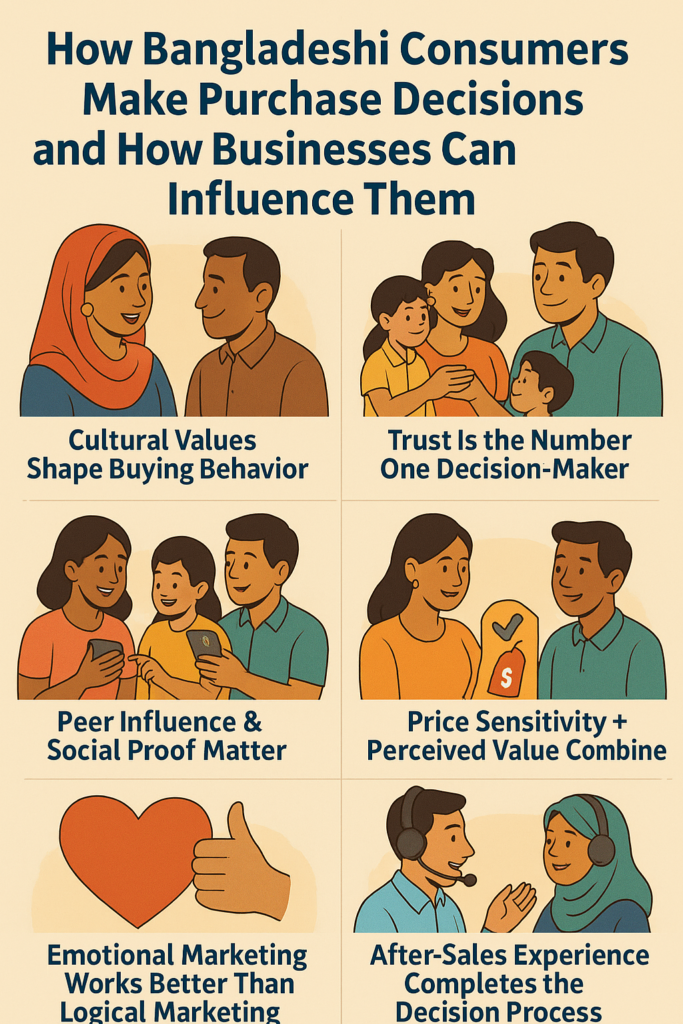
1. Cultural Values Shape Buying Behavior 🇧🇩
Bangladesh’s culture is deeply rooted in community living, emotional bonding, and collective values. These cultural elements affect daily shopping choices.
Key Cultural Influences
- Community opinions matter. People often ask friends, neighbors, and relatives before buying.
- Brand loyalty grows through feelings, not ads alone.
- Respect and politeness in communication influence trust.
How Businesses Can Use This
- Build your brand around empathy, respect, and care.
- Use storytelling that reflects family values, honesty, and tradition.
- Engage with customers through polite, human-centered communication—online and offline.
2. Trust Is the Number One Decision-Maker 🤝
In Bangladesh, consumers don’t buy the product first—they buy the person or the brand reputation behind it.
What Builds Trust
- Clear communication (no hidden conditions)
- Reliable product quality
- Consistent service
- A brand that stands by its words
Practical Ways to Build Trust
- Show real customer feedback.
- Use transparent pricing and policies.
- Provide after-sales support.
- Keep your promises—delivery, warranty, or quality.
Trust takes time, but once earned, Bangladeshi consumers become your strongest promoters.
3. Family Involvement Is Common 👨👩👧👦
In many households, key decisions are made as a group.
Typical Scenarios
- Electronics & appliances: whole family discusses before buying.
- Clothing & fashion: siblings or parents give opinions.
- Food & daily essentials: chosen based on family preference and habit.
How Businesses Can Influence This
- Create ads that show families using your product together.
- Offer bundle deals or family packs.
- Make your sales pitch simple enough for all age groups to understand.
When you win one family member, you often win the whole household.
4. Peer Influence & Social Proof Matter 👥
Bangladesh is a socially connected country—recommendations spread fast.
Consumers feel confident when:
- A friend recommends a product
- They see neighbors using it
- A trusted influencer gives a review
- They see many positive comments on social media
How to Use Social Proof
- Use user-generated content.
- Post success stories with real customer photos (non-local illustrations or art are also fine).
- Encourage ratings and reviews.
- Work with micro-influencers who have real engagement, not just followers.
5. Price Sensitivity + Perceived Value Combine 🛍️
Price is important, but not the only factor. Consumers look for value.
What “Value” Means in Bangladesh
- How long the product lasts
- How useful it is
- Whether friends or family approve
- Whether the brand is known for reliability
How to Influence Value Perception
- Offer small trial packs
- Create combo offers
- Highlight long-term benefits rather than just discounting
- Compare your product’s value vs. alternatives in simple language
6. Emotional Marketing Works Better Than Logical Marketing ❤️
Emotions drive buying decisions more than features and specifications.
Examples of Emotional Drivers
- “This will keep my family safe.”
- “My child will be happy.”
- “This brand feels trustworthy.”
Business Tip
Use messaging that focuses on:
- Security
- Love
- Pride
- Happiness
- Convenience
When people feel emotionally connected, they rarely switch brands.
7. After-Sales Experience Completes the Decision Process 🔄
Bangladeshi consumers rely heavily on businesses that stay connected after the purchase.
Important After-Sales Factors
- Quick support
- Easy warranty processes
- Friendly communication
- On-time service
How This Influences Future Purchases
One good experience → customers return
One bad experience → customers tell many others not to buy
This is why after-sales is a long-term investment, not a cost.
Conclusion
Understanding how Bangladeshi consumers think and act helps businesses design better sales and marketing strategies.
If you focus on trust, cultural connection, family engagement, and emotional value—you will influence buying decisions naturally.